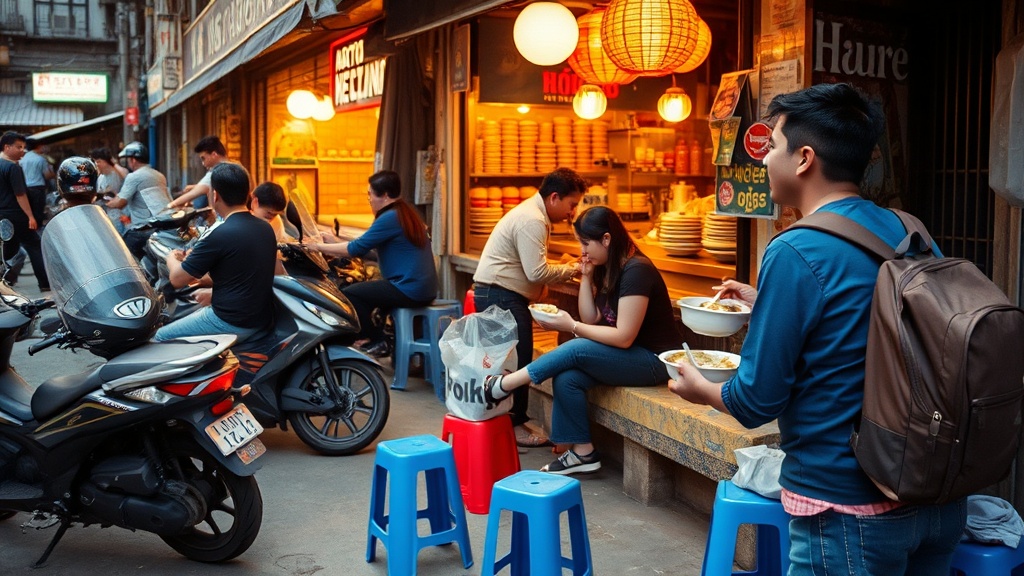
The $25/Day Southeast Asia Ranking: Every Country from Cheapest to 'Wait, That's Bangkok Prices?'

Southeast Asia still under $25/day — but not all of it. Here's the real ranking.
I hear this question constantly: "Is Southeast Asia still cheap?" The honest answer is: some of it is. Vietnam? Criminally affordable. Thailand? Depends entirely on which city and whether you're okay eating like a local. Singapore? Get out of here.
I'm going to rank every major backpacker destination in Southeast Asia by actual daily cost — not the "budget travel" blog roundup that calls $80/day "budget" — but the real number. The hostel dorm rate. The bowl of pho. The Grab ride across town. Verified against current 2026 prices.
On $38K/year, I can afford three months in Southeast Asia if I pick right. (This is the same budget I used when I traveled to 23 countries on a barista salary.) Can you afford to pick wrong?
The Methodology
Daily budget = hostel dorm bed + 3 meals (street food or local restaurant, no tourist trap) + local transport + 1 activity or entrance fee + a reasonable safety margin.
I'm not including international flights. I'm not including visas (those vary wildly — more on that below). I'm not including alcohol because if you're doing a beer every night in Bangkok you need to budget that separately and also maybe think about that.
These prices are for cities with active backpacker scenes — so Hanoi, not rural Laos; Manila, not remote Palawan. When I have personal trip data, I'll flag it. When I'm working from current Hostelworld rates and forum intel (sampled March 2026), I'll say that too.
A note on accuracy: Hostel and street food prices shift constantly. The numbers below represent ranges I've personally experienced or cross-referenced against current listings — but always do a 10-minute Hostelworld search for your specific dates before you commit to a daily budget. And for visa requirements, always verify against official government immigration portals before you travel. I'll point you to the relevant sources in the visa section.
The Ranking: Cheapest to Most Expensive
🥇 1. Vietnam — $18–$23/day
Best cities: Hanoi, Hoi An, Ho Chi Minh City
Vietnam is the undisputed champion. I spent 6 weeks here across two trips and I'm still not sure how this country is legal for budget travelers.
Actual 2026 numbers:
- Hostel dorm (Hanoi, Hoi An): $5–$8/night — consistently some of the best-quality budget dorms in Southeast Asia
- Street food (bun bo hue, banh mi, bowl of pho): $1–$2.50 per meal. Eat three times a day for $5–$6 total. Not a joke.
- Grab (motorbike across Hanoi): $0.80–$2 per ride
- Overnight sleeper train (Hanoi to Da Nang): $20–$28 — worth it, and it replaces a night of accommodation
- Average temple/museum entrance: $2–$4
My honest daily average in Hanoi: $19–$21. (I broke this down in more detail in my Hanoi cost breakdown.) In HCMC it crept toward $23 because I kept getting sucked into Ben Thanh Market coffee.
The catch: Most nationalities (including US citizens) pay $25 for a 90-day e-visa — apply at the official portal before you fly. Also: tourist-facing restaurants can triple the price. Eat where the motorbikes park outside, not where you see a QR code menu in English.
🥈 2. Cambodia — $20–$26/day
Best cities: Siem Reap, Kampot, Phnom Penh
Cambodia should probably be #1 except for one thing: Angkor Wat. The 3-day pass is $62, the 7-day is $72. If you're in Siem Reap (and you're going to Siem Reap), that $62 hits your daily average hard. Spread it over 3 days and suddenly you're at $30/day those days. Budget accordingly.
Actual 2026 numbers:
- Hostel dorm (Siem Reap): $5–$9/night
- Street food / local restaurant: $2–$3.50 per meal, $6–$9/day eating well
- Tuk-tuk (within town): $2–$4 per trip
- Beer from a convenience store: $0.75–$1. Yes, really.
- Angkor Wat 1-day pass: $37; 3-day: $62; 7-day: $72
Daily average without Angkor days: $20–$23. Angkor days: budget $50+.
The underrated move: Kampot. Smaller, slower, coastal. I've seen backpackers do $18/day there without trying hard. Better vibes than Siem Reap once you've seen the temples.
🥉 3. Laos — $22–$27/day
Best cities: Luang Prabang, Vang Vieng, Vientiane
Laos is the wildcard. It's consistently underrated on the budget circuit because infrastructure is rougher, which means fewer tourists, which means prices haven't inflated. The trade-off is getting around costs more (bus rides are longer, flights are pricier for what you get).
Actual 2026 numbers:
- Hostel dorm (Luang Prabang): $7–$12/night — slightly higher because Luang Prabang is a UNESCO World Heritage site and knows it
- Street food / local market: $1.50–$3 per meal
- Slow boat (Huay Xai to Luang Prabang, 2 days): ~$40–$50 total including basic guesthouse stop — one of the best travel experiences in SEA
- Local bus (Luang Prabang to Vang Vieng): $12–$15
Daily average: $22–$25 in Vang Vieng, $24–$28 in Luang Prabang.
Vang Vieng caveat: if you're there to do the tubing/bar scene, your daily budget is not $25. It's $50+. Vang Vieng is a party trap with beautiful scenery and I say this as someone who's been there twice.
4. Philippines — $25–$32/day (Manila/Cebu), $20–$26/day (off-path)
Best budget cities: Cebu, Dumaguete, El Nido (budget varies wildly)
The Philippines has a split personality for budget travelers. Manila and the tourist beach circuits (Palawan, Boracay) run expensive — internal flights are the killer. But Cebu, Dumaguete, and the Visayas region? Still genuinely cheap if you plan around the island-hopping logistics.
Actual 2026 numbers:
- Hostel dorm (Cebu City): $7–$11/night
- Street food / carinderia (local canteen): $1.50–$3.50 per meal
- Jeepney (local): $0.25–$0.50 per ride; Grab: $2–$5 across town
- Internal flights (Cebu to Palawan): $30–$60 one way, often more — this is where Philippines budgets die
The honest math: If you fly between islands more than twice in two weeks, you will blow your budget. The Philippines rewards slow travel. Pick a region, stay there, take boats instead of planes when possible.
Daily average in Cebu staying put: $22–$26. Daily average if you're chasing beaches everywhere: $40+.
5. Indonesia — $25–$35/day
Key cities: Ubud (Bali), Yogyakarta, Lombok
I know everyone wants to hear that Bali is cheap. Bali is not cheap anymore. It was cheap in 2018. In 2026, Bali — specifically Seminyak, Canggu, and the Instagram-core wellness circuits — will drain you fast. That said, Ubud is more manageable, and Java (Yogyakarta especially) is legitimately affordable.
Actual 2026 numbers:
- Hostel dorm (Ubud): $9–$14/night. (Canggu: add $3–$5 and accept the vibe tax.)
- Warungs (local food stalls, Ubud): $2–$4 per meal. Tourist cafes: $8–$15. Do not eat at the tourist cafes.
- Scooter rental (Ubud, per day): $5–$7 — this is non-negotiable, get the scooter
- Temple entrance fees (Uluwatu, Tanah Lot, etc.): $2–$6 each, adds up fast
Yogyakarta daily average: $22–$28 — genuinely underrated, home to Borobudur, and 1/3 the tourist density of Bali.
Ubud daily average: $28–$35 if you're being disciplined. $50+ if you slip into smoothie bowl and yoga territory.
6. Malaysia — $30–$40/day
Key cities: Kuala Lumpur, Penang, Kota Kinabalu
Malaysia is the "comfortable budget" destination. Hostels are quality, food courts (hawker centers) are incredible and reasonably priced, transport infrastructure is excellent. It's just not cheap-cheap.
Actual 2026 numbers:
- Hostel dorm (KL): $10–$16/night — higher than the rest of the region, but quality is generally better
- Hawker center meals (KL, Penang): $2–$5 per meal — nasi lemak, char kway teow, roti canai — genuinely fantastic
- MRT/LRT (Kuala Lumpur): $0.80–$2.50 per trip, excellent system
- Grab (within KL): $3–$8 depending on distance
Daily average: $30–$38 without trying to cut corners. Penang is slightly more affordable than KL, and the food scene in Penang is worth every ringgit.
The wild card: Petronas Towers area, the bars around Bukit Bintang — money disappears there. Eat in the hawker centers, see the city, move on to Penang.
7. Thailand — $32–$45/day (Bangkok/Chiang Mai), cheaper in the north
The Bangkok Problem:
Okay. Let's talk about it.
Thailand was the budget travel benchmark for 20 years. $25/day, $20/day, $15/day — those numbers lived in every Southeast Asia guide from 2005 to 2020. They're gone. Bangkok in 2026 is not 2016 Bangkok. Chiang Mai is still more manageable, but Bangkok specifically has inflated substantially.
Actual 2026 numbers:
- Hostel dorm (Bangkok): $12–$18/night. (KhaoSan Road area: $10–$15 but you're living in a zoo.)
- Street food (Bangkok): $2–$4 per meal — pad thai from a street cart, boat noodles, mango sticky rice. This part held up.
- BTS Skytrain (Bangkok): $1–$2.50 per trip. Adds up across a city this spread out.
- Grab (Bangkok): $4–$12 depending on traffic and how far you're going
Bangkok daily average: $32–$42. I'm not making this up. Hostel prices spiked hard post-2023 and haven't come back down.
Chiang Mai daily average: $26–$34. More forgiving. Cafes are cheaper, transport is cheaper, hostels are slightly cheaper.
Where Thailand is still cheap: small northern towns (Pai, Chiang Rai), rural Isan. If you're on the tourist circuit — Bangkok, Koh Samui, Phuket — budget $40–$60+/day or accept that you're not doing budget travel.
Why did Thailand spike? A few reasons: post-COVID tourism demand hit harder here than other destinations; digital nomad/long-term stayer influx drove up accommodation costs; the baht held relatively firm. Meanwhile Vietnam and Cambodia kept prices low. Thailand's moment as "the cheap option" is over.
8. Singapore — $80–$120+/day
Not even going to do a full breakdown. Singapore is a global city with global city prices. I love Singapore. I budgeted $4 for a hawker center plate of chicken rice (worth every cent), $15 for hostel dorm (among the most expensive in SEA), and spent $25 getting from Changi to the hostel and back. Do Singapore for 2–3 days as a transit stop, not a budget destination.
The Hidden Costs That Blow Every Budget
Here's where budgets actually bleed:
Visas — always verify on official government portals before you book, these change:
- Vietnam: ~$25 e-visa, 90 days multiple entry for most nationalities including US. Apply through the official Vietnam e-visa portal.
- Cambodia: $30 on arrival or e-visa. Check evisa.gov.kh for current terms.
- Laos: $30–$42 on arrival, varies by nationality. Check immigration.gov.la for the full nationality table.
- Indonesia: Visa on Arrival (VoA) costs $35 for 30 days, extendable once for another 30 days at an additional $35 — so $70 total for 60 days. This applies to most western passports including US and EU. (Note: a handful of ASEAN and a small number of other nationalities enter visa-free; US and EU travelers are not in that category and pay the $35 VoA fee. Verify current eligibility at imigrasi.go.id before you fly.)
- Philippines: Visa-free on arrival, 30 days, for most western passports. Extendable at a Bureau of Immigration office. No advance application needed.
- Thailand: Visa exemption on arrival, 30 days for most western passports (some nationalities get 60 days — check the Thai immigration table). Extendable once at an immigration office. Verify at immigration.go.th.
- Malaysia: Visa-free, 90 days, US/EU/most western passports. No application needed.
Run Vietnam + Cambodia + Laos back-to-back and you're spending $85–$107 just on entry fees. Budget for this separately — it's not in your daily spend but it hits before you even buy a bowl of pho.
Internal flights:
Regional hubs: Bangkok (BKK/DMK), Singapore (SIN), Kuala Lumpur (KUL), Manila (MNL). Budget carriers (AirAsia, Cebu Pacific, VietJet) are cheap if you book 3–6 weeks ahead. Book day-of and pay tourist prices. A Hanoi → Siem Reap flight booked last minute: $120–$180. Booked 3 weeks ahead: $45–$70. (If you want the full breakdown of how to book cheap regional flights, I've documented that strategy in detail.)
Travel days:
The day you're moving countries is always expensive. Taxi to bus station + overnight bus/train + taxi from station = $20–$40 that doesn't count as a "normal" daily spend but it's real money.
Sunset drinks, temple donations, "suggested" entrance fees:
These are $3–$8 each and they happen constantly. A week in Luang Prabang includes almsgiving donations, temple fees, viewpoint fees, boat fees. Budget $5–$10/day for "miscellaneous spirituality and scenery costs."
(One hidden cost you can actually eliminate: international data fees. The SIM card hack most budget travelers miss will save you $8–$15/trip.)
Best Budget Months for Each Country (Shoulder Season Sweet Spot)
Vietnam: March–April and September–October. Avoid May–August (hot, humid, increasingly rainy in the south). March in Hanoi is genuinely perfect weather.
Cambodia: November–February is peak/dry season. March–April starts getting brutal hot. Go November or February.
Laos: November–February (cool and dry). March–April: too hot. Rainy season (May–Oct) has leeches on hikes.
Philippines: March–May is generally the sweet spot for Cebu and the Visayas — the dry season has settled and you're ahead of the heat. One thing worth clarifying: typhoon season in the Philippines runs roughly June–November, with October–November being peak exposure for the eastern coast (Eastern Visayas, Samar). By January, typhoon risk is essentially zero. What the eastern coast actually gets in December–February is the northeast monsoon (amihan) — persistent rain and rougher seas, not typhoons. The western coast and central Visayas are largely fine in that window. If you're doing Cebu, March is a great call. If you're planning eastern Samar or eastern Leyte, skip October–November and note the rougher December–February seas.
Indonesia/Bali: April–June and September–October. July–August is peak season with prices to match. January–March is rainy but cheaper and less crowded.
Thailand: November–February is peak season (best weather, most expensive). March–April: hot. May–October: rainy season but cheaper. March is actually decent — shoulder season pricing, still manageable weather outside of southern islands.
Malaysia: Year-round mostly fine. November–January can bring heavy rains on the east coast. KL and Penang are fine whenever.
The Final Verdict
Here's the honest ranking if you're trying to stay under $25/day:
| Country | Daily Budget Range | Under $25 Possible? |
|---|---|---|
| Vietnam | $18–$23 | ✅ Consistently |
| Cambodia | $20–$26 | ✅ (avoid Angkor days) |
| Laos | $22–$27 | ✅ If you skip Luang Prabang luxury |
| Philippines (off-path) | $20–$26 | ✅ If you don't fly between islands |
| Indonesia (Java) | $22–$28 | ✅ Skip Bali Canggu entirely |
| Malaysia | $30–$38 | ❌ Beautiful but pricier |
| Thailand (Chiang Mai) | $26–$34 | ⚠️ Barely, with discipline |
| Thailand (Bangkok) | $32–$42 | ❌ Not in 2026 |
| Singapore | $80–$120+ | 🚫 Not a budget destination |
If you're planning a Southeast Asia trip this spring and you want to maximize your budget: start in Hanoi, work your way down to Hoi An and HCMC, cross into Cambodia for Siem Reap and Kampot, loop through Laos if you have the time. Thailand as an end-of-trip cap — fly into Bangkok, 2–3 days, move north to Chiang Mai for a week, out.
That's a 6–8 week circuit with an average daily spend of $21–$26, depending on how many Angkor day passes you buy and whether you eat the $12 pad thai at the tourist place on KhaoSan Road. (Don't eat the $12 pad thai on KhaoSan Road.)
Pick your country. Go in April. Thank me later.
Prices cross-referenced against Hostelworld listings and backpacker forums, March 2026. Visa information reflects publicly available policy as of the same date — always verify against official government immigration portals before you book, as policies change without notice.
Ravi Patel has been to 23 countries on a barista salary and hasn't paid more than $35/day in Southeast Asia since a regrettable beach resort decision in 2023. He regrets the beach resort. He's also packed for those 23 countries in a 40L carry-on, so if you need packing strategy to match your budget, that post has you covered.