
I Flew Round-Trip to Colombia for $287. Here's Exactly How.

Listen, I just booked a round-trip to Bogotá for $287. JFK to BOG, April 3rd to April 14th, Copa outbound with a stop in Panama City, Avianca return through Medellín. I have the confirmation email open in another tab right now.
This isn't a travel hacker thing. This isn't a credit card points redemption (though if you want that angle, here's how to start). This is a cash fare I found using a system I've refined over three years and 23 countries. And the timing matters — Colombia is entering its lower-demand season right now, spring break is driving up prices on every competing route, and similar fares were still showing up as of Wednesday morning if you looked in the right places.
Let me break down exactly how this happened.
The Actual Numbers
Route: JFK → PTY → BOG (Copa, one stop via Panama City) / BOG → MDE → JFK (Avianca, one stop)
Booked: Tuesday, March 4th at 11:40 PM
Travel dates: April 3–14
Total charged: $287.40
Here's what that breaks down to:
- Base fare: $218
- Taxes and carrier surcharges: $51.40
- Seat selection (3A, window): $18
The $287 is the real number. No hidden fees, no "starting from" base-fare trick. The $218 base showed up on Google Flights, confirmed on Kayak, and I booked directly through Copa's site. The seat selection is optional — skip it and you're at $269.
(I'm posting this Friday March 5th. Fares move fast — by the time you read this, this specific itinerary may have repriced. The method is the point, not the screenshot.)
The Method
Here's the part everyone wants to skip to, and I get it. But read the whole section because the method is more than just "use Google Flights."
Step 1: I had a Google Flights alert already set.
I run standing price alerts for routes I travel regularly. JFK → BOG, threshold set at $350 — my usual baseline for Colombia. Google Flights emails you when the price drops below whatever you set. This alert was running in the background for weeks. When this deal hit, I got an email at 10:52 PM Tuesday saying fares had dropped to $228. That's the starting point — I would have missed it entirely without the alert.
Step 2: Tuesday nights come up in my deal log more than any other window.
I've tracked my own bookings for three years. Looking back at my deal log, three of my last five international flight deals landed on a Tuesday or Wednesday morning alert. The theory is airlines reprice after weekend and Monday demand settles — but I can't back that up with airline data, and you'll find people who say the pattern doesn't hold. What I can say is that Tuesday nights are worth having your alerts active and checking. Treat it as a habit worth building, not a hard rule.
Step 3: I searched in incognito.
Whether incognito mode actually changes prices is genuinely uncertain — testing has produced conflicting results, and the "airlines track your searches and raise prices" claim is mostly anecdotal. What's harder to dispute is that OTAs have been observed showing different prices to logged-in vs. anonymous visitors in certain situations. Incognito clears session caching and any persistent state. It costs nothing and takes two seconds. Whether it changes your fare — I can't promise that. I do it out of habit.
Step 4: I verified on ITA Matrix.
ITA Matrix (matrix.itasoftware.com) is Google's flight search engine before the consumer layer gets added. You can't book through it directly, but it shows you the exact routing options and base fares without the markup or display manipulation. I confirmed the $218 base was legitimate — not a "select dates to see real price" trap — before committing to booking through Copa.
Step 5: I had a flexible date window locked.
I wasn't set on April 3rd specifically. I had flexibility from April 1–5 for departure and April 12–16 for return. Google Flights' date grid view (hit the calendar icon after entering your route) showed the cheapest combination was April 3–14. One day earlier or later cost $30–$50 more each way. Flexibility is the actual cheat code — not any specific tool or alert service.
Why This Window Worked
This is the part that feels like luck but isn't.
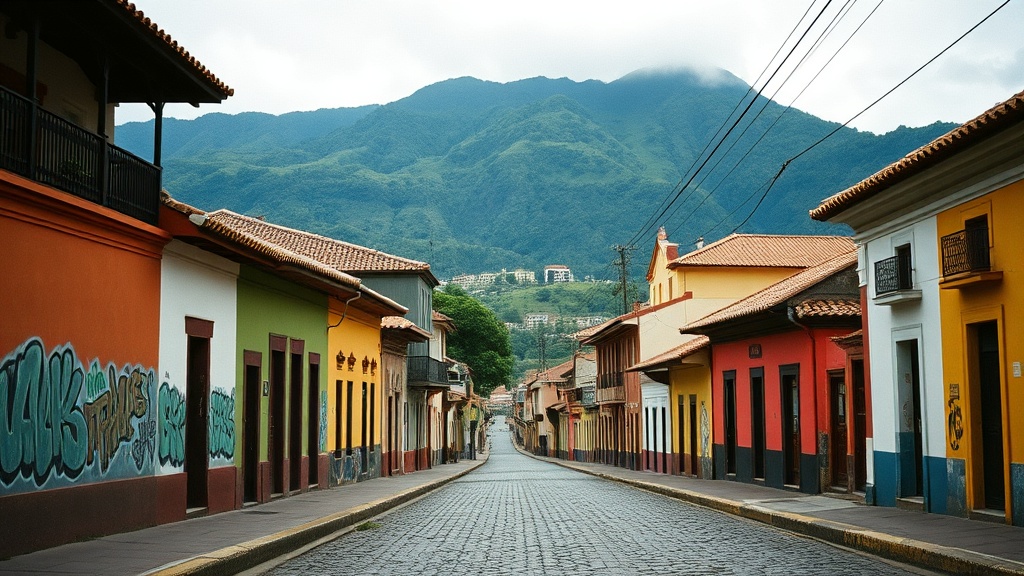
Colombia's seasons are regional and complicated — it's a big country and the climate varies a lot by altitude and geography. But Bogotá specifically sits at about 8,600 feet elevation and runs mild year-round, roughly 50–65°F most days. The practical difference for a Bogotá city trip in April vs. December: more afternoon showers, most days still fine in the morning, bring a layer. Not monsoon. Not miserable. For city travel, the experience is largely similar to the drier months — the airfare historically hasn't been.
Looking at my own bookings, April and May have consistently come in lower than the peak winter dry season (December–March) and peak summer (June–August). That's based on my JFK-BOG history specifically — if you're going somewhere else in Colombia with genuine coastal or mountain seasonality, do your own homework on what lower-demand months actually mean for that destination.
Meanwhile, spring break is hammering every "obvious" route right now. I checked this week: JFK to CUN for spring break dates is running $480–$620. That demand doesn't directly cause Colombia fares to drop — but it concentrates budget travelers on those routes and reduces competition on alternatives like Bogotá. Whether the correlation is causal or just parallel, the pricing pattern shows up in my data. I've seen it more than once.
That said: this is a pattern I've observed, not a mechanism I can prove. Watch for it, don't bank on it.
The Replication Playbook
Here is the exact 5-step process to find something similar this week:
1. Set a Google Flights price alert for Colombia today.
JFK, MIA, or LAX to BOG or MDE. Set your threshold at your maximum — I use $350. Takes four minutes. You'll get an email when it drops below that.
2. Check your alerts Tuesday evening.
This window shows up in my deal history more than others. Not a guarantee — just a habit worth building.
3. Use the date grid, not fixed dates.
On Google Flights, after entering your route, hit the calendar icon to pull up the full date grid. It shows cheapest combinations across a two-month range. Green squares are what you want. If you only search fixed dates, you're leaving money on the table.
4. Verify on ITA Matrix before booking.
Go to matrix.itasoftware.com and input the same routing. If the base fare matches what you see on Google Flights (minus taxes), it's real. If it doesn't populate, the fare may already be gone.
5. Book directly with the airline when possible.
Not always cheaper, but you get better protection if something goes wrong. For Copa and Avianca, direct booking showed no price difference from Kayak on this trip.
Reality Check
Not every flight is $287. The internet is full of screenshot deals that are gone before you click, and I'm not trying to hype this into something misleading.
My last five cash round-trips to Colombia from JFK:
- April 2026 (this booking): $287
- October 2025: $341
- March 2025: $319
- November 2024: $298
- July 2024: $388 (peak summer — I knew it was expensive and went anyway, zero regrets)
Average: roughly $327. The $287 beats my usual baseline by $40–$60. That's not life-changing. But that's also 2.5 hours of my pre-tax barista wages, and I was taking this trip no matter what. Saving $60 on a flight I was going to book anyway is the same as choosing not to work two hours for free.
Based on my own booking history from JFK over the past three years, East Coast departures to Colombia have landed in the $290–$380 range with date flexibility. Travelers I've talked to who fly out of Miami describe sub-$250 as something they've hit with patience. Midwest departures tend to run higher — I've seen people in the budget travel forums I follow report $350–$420 as typical. These are observations from watching this route and talking to other people doing the same — not a pricing guide. Fares shift. Use these as a reference frame, not a number to hold me to.
The Barista Math
I make $38K a year. After taxes and my $950 rent in Astoria, I have roughly $1,500/month for everything else. Travel is not a line item I was born into — it's one I optimize for deliberately.
Here's how I think about flight savings: every $50 I save on a flight is about 3 hours of my pre-tax barista wages. Not abstract. That's a Tuesday afternoon shift. If I take four international trips a year (I do) and save an average of $60 per flight versus booking without a system, that's $240 annually. That's my flight to Bangkok. That's my second week in Colombia.
The people who tell me budget travel is for people who "have time but not money" are missing the point entirely. I have neither, relatively speaking. I just don't waste either.
This deal I found? The system that found it took me 20 minutes to set up originally — mostly just setting up the Google Flights alert — and zero time to maintain. The email came in at 10:52 PM. I was booked by 11:40. That's the whole thing.
What to Do Before Friday
Right now — this week specifically — is one of the better windows for Bogotá deals based on what I've seen: spring break demand is peaking on competing routes and Bogotá's lower-demand months are starting. If you've been thinking about a Latin America trip and you're flexible on dates between late March and May, open Google Flights tonight. Look at BOG or MDE. Set the alert if you're not ready to book.
The fare I found held for about 18 hours before climbing back to $340. I caught it because my system was already running. The alert was set. The ITA Matrix process was practiced. When the email hit at 10:52 PM on a Tuesday, I didn't have to figure anything out. I just confirmed.
That is not luck. That is prep.
Your $1,500 spring break isn't inevitable. Neither is the version where you don't travel because flights are "too expensive." The $287 fare existed. The system to find the next one is right here.
Ravi Patel has visited 23 countries on a barista salary. He posts daily budget breakdowns and travel system guides at Budget Trips.