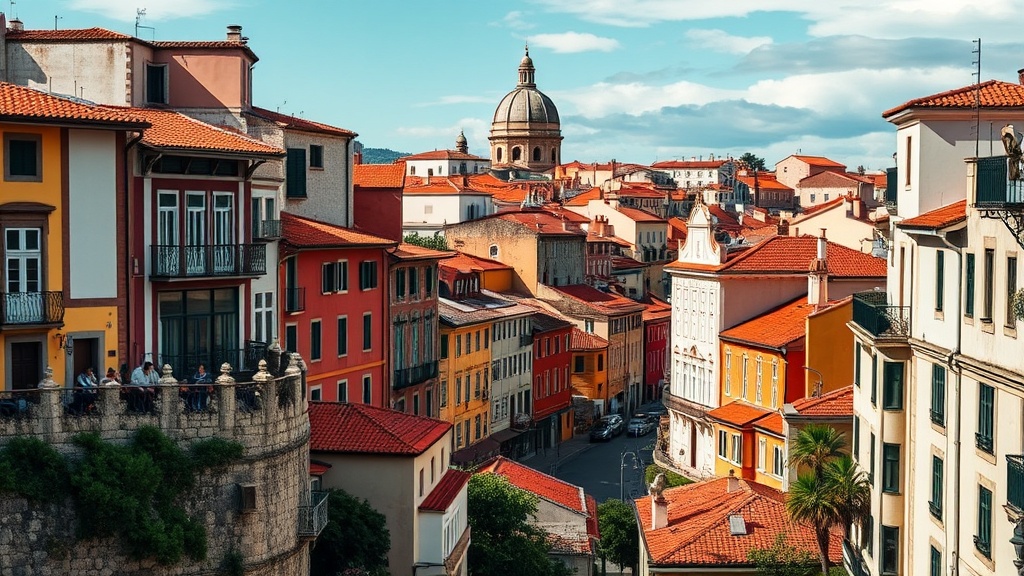
Can You Actually Backpack Portugal for Less Than Southeast Asia?

Most budget travelers assume Southeast Asia holds a monopoly on $30 daily budgets. Europe, they imagine, demands at least $80 per day—maybe more if you want actual comfort. That assumption is costing you experiences, and it's outdated by about five years.
Portugal quietly dismantles this myth. While travel bloggers flood your feed with Thai island hops and Vietnamese street food crawls, Portugal offers comparable daily costs with better infrastructure, shorter flights from North America, and zero jet lag. I spent 23 days there last spring averaging $38 per day—less than my $42 daily average in Malaysia the previous year, and significantly more comfortable than my $35 days in Cambodia.
Here's how the numbers actually break down—and why Portugal deserves a serious look for your next budget trip.
Where Can You Sleep for Under $20 a Night?
Accommodation typically devours 40-50% of any backpacker budget. In Portugal, this doesn't mean settling for 16-bed dorms with broken air conditioning and that one guy who snores like a chainsaw.
Lisbon's hostel scene rivals Berlin's quality at roughly half the price. Private rooms in well-reviewed guesthouses (called pensões) run €18-25 ($19-27) in central neighborhoods like Alfama, Mouraria, or Graça. Compare that to Barcelona, where similar rooms cost €45-60, or even Bangkok, where decent private rooms in central districts like Silom or Sukhumvit now run $25-35 thanks to post-pandemic inflation.
Porto drops even lower. I spent four nights in a riverside guesthouse in the Ribeira district—with breakfast included—for €22 per night total. The view included the Dom Luís I Bridge and passing cargo ships. The same property in Prague would cost triple; in Paris, you couldn't find it at all. Smaller cities like Braga (religious heritage, young university crowd), Coimbra (medieval university town), or Aveiro (Portugal's "Venice" with canals and art nouveau architecture) offer quartos—private rooms in family homes—for €15-20, often with full kitchen access.
Summer (July-August) spikes prices 30-40%, sure. The Algarve becomes a British tourist playground, and Lisbon's Airbnb market squeezes locals. But Portugal's mild Atlantic climate means March-May and September-November offer ideal beach weather at off-season rates. That's when you'll find the real deals—like €12 dorm beds in Lagos, €16 private rooms in Sintra, and €20 apartments in Cascais that would cost €60 in June.
Unlike Southeast Asia, where "budget" often means cold showers, questionable wiring, and mattresses that saw better decades, Portugal's tourism regulations enforce basic safety and cleanliness standards. You're getting genuine value—not just a cheap mattress on a concrete floor.
How Much Does Food Actually Cost?
Eating well in Portugal costs less than cooking for yourself in London or New York. The country's prato do dia (daily menu) tradition—available at nearly every neighborhood restaurant—delivers three courses plus coffee for €8-12 ($8.50-13).
These aren't sad cafeteria plates, either. Expect soup (caldo verde with collard greens and potato, or sopa de legumes), a main of grilled sardines, bacalhau (salt cod), or stewed pork with rice and vegetables, dessert (often pudding or fruit), and an espresso. Wine costs €1-2 extra—less than a Coca-Cola in most places.
Supermarkets tell a similar story. Pingo Doce and Continente (Portugal's largest chains) sell fresh pão (bread) for €0.30-0.50, local cheese for €2-4 per block, and drinkable wine starting at €2.50 per bottle. A self-catered day—breakfast of pastries and coffee from a bakery, picnic lunch of bread, cheese, and fruit, simple pasta dinner—runs $12-15 total.
Even "fancy" experiences stay reasonable. A pastel de nata (the famous custard tart) costs €1-1.20 at most bakeries. An espresso (bica in Lisbon, cimbalino in Porto) runs €0.60-0.80. Compare that to $4-5 lattes in American cities—or even $2-3 in Vietnamese tourist areas like Hoi An or Phnom Penh's riverside, where prices inflated years ago to match tourist expectations.
The Algarve (southern coast) runs 20-30% higher in restaurants catering to British package tourists. Stick to local tascas—family-run spots with paper tablecloths, handwritten menus, and grandmother in the kitchen—and you'll eat fresh grilled fish with vegetables for under €15 per person. That's still competitive with Malaysia's tourist beach towns and far cheaper than comparable meals in Spain or Italy.
Is Getting Around Portugal Actually Affordable?
Transportation separates manageable budgets from completely broken ones. Portugal's compact size works heavily in your favor here—you can cross the entire country in under six hours.
The train network (Comboios de Portugal) connects major cities with modern, clean carriages. Lisbon to Porto—313 kilometers—costs €15-25 depending on booking timing. The same distance in Italy runs €45-80; in France, €60-100. Buses (Rede Expressos and FlixBus) fill gaps, with Lisbon-Faro (278km) costing €15-19.
Within cities, metro and bus systems charge €1.50-2 per ride. Daily passes run €6-7 and include unlimited transport plus funicular rides in Lisbon. Walking remains your best strategy—Portugal's historic centers are compact, pedestrianized, and genuinely pleasant for wandering.
Here's where Portugal quietly outperforms Southeast Asia: time has value too. A 12-hour Vietnamese bus ride from Hanoi to Da Nang costs $15 but wastes a full day and destroys your spine. Portugal's Lisbon-Porto train takes 2.5 hours through scenic countryside. You gain time for actual experiences without sacrificing your budget to inflated tourist prices.
Car rentals start at €20-25 daily in low season—reasonable for groups of two or three. Fuel costs €1.60-1.80 per liter (roughly $6.50/gallon), so calculate carefully. For solo travelers, public transport wins easily; for pairs wanting beach flexibility, a rental car might pay for itself in convenience.
What Free and Cheap Activities Actually Deliver?
Portugal's best experiences cost little or absolutely nothing. The country's 832 kilometers of Atlantic coastline includes stunning beaches—many completely free and far less crowded than Thailand's packed strips. Praia da Marinha (Algarve) features limestone arches and turquoise water. Nazaré delivers monster waves and surfing spectacle. Guincho near Cascais offers windswept drama. All free.
Walking tours operate on tip-only basis in Lisbon, Porto, and increasingly in smaller cities like Évora. While "free" walking tours exist worldwide, Portugal's guides receive proper licensing from the tourism board—meaning accurate history, genuine local knowledge, and no script-reading backpackers working for beer money. Tip €5-10 for a 3-hour tour; that's your entertainment and education covered for the morning.
Many museums offer free entry on Sunday mornings until 2 PM. The Calouste Gulbenkian Museum in Lisbon—housing one of Europe's finest private art collections spanning 4,000 years—costs nothing during these hours. Berardo Collection Museum (modern art), the National Tile Museum, and several state museums follow similar policies.
Hiking trails abound for outdoor enthusiasts. The Rota Vicentina along the Alentejo coast offers 120 kilometers of marked trails through fishing villages and dramatic cliffs. The Peneda-Gerês National Park in the north provides mountain lakes and ancient stone pathways. Sintra's forested hills hide castles, palaces, and mysterious Initiation Wells. Pack a €3 supermarket lunch and you've filled an entire day for the price of a coffee.
Even nightlife stays reasonable. A imperial (draft beer) at a Lisbon neighborhood bar costs €2-3. Wine glasses run €3-5. That's comparable to Vietnamese bia hoi (fresh beer) prices in Hanoi and far cheaper than Barcelona, Amsterdam, or Berlin's inflated tourist zones.
Where Does Portugal Actually Cost More?
Honest budgeting requires acknowledging where Portugal falls short of Southeast Asian prices. The Algarve in July and August? Prices double—sometimes triple. Surf camps and yoga retreats charge Western European rates (€60-80 per night), not Portuguese ones. The solution is simple: visit in shoulder season (May-June, September-October) and you'll find empty beaches, lower accommodation costs, and locals who actually have time to chat.
Accommodation in Sintra—popular for its fairy-tale palaces and castle ruins—costs 40% more than Lisbon despite being just 30 minutes away by train. Day-trip it from the capital instead. The famous pasteis de Belém (the original custard tarts) cost €1.30 each, while virtually identical tarts at bakeries across Lisbon sell for €1. You're paying for the historical name and the Instagram queue.
Summer festivals inflate everything. Santos Populares (June), NOS Alive (July), and various wine harvest celebrations fill hotels and push restaurant prices higher. Book accommodations two months early or avoid these dates entirely.
Still, even accounting for these exceptions, Portugal averages $35-45 daily for careful travelers who cook occasionally, stay in private rooms or small dorms, and use public transport. That's competitive with Thailand outside Bangkok and the islands, cheaper than Bali's increasingly expensive Canggu and Ubud, and significantly less than Malaysia's Perhentian Islands or Tioman.
Your flight from North America might cost $200-400 more than reaching Bangkok—but you'll save that difference within two weeks of lower daily costs. Plus, you skip the 20-hour flight, brutal jet lag, and the "travel recovery day" that quietly adds expense to every Asia trip. Sometimes "budget" means counting your hours and energy, not just the dollars leaving your account.
Pack light, learn five Portuguese phrases (locals appreciate the effort), and bring comfortable walking shoes. Portugal rewards travelers who move slowly, eat locally, and skip the resort complexes. That's not just budget travel—that's better travel.