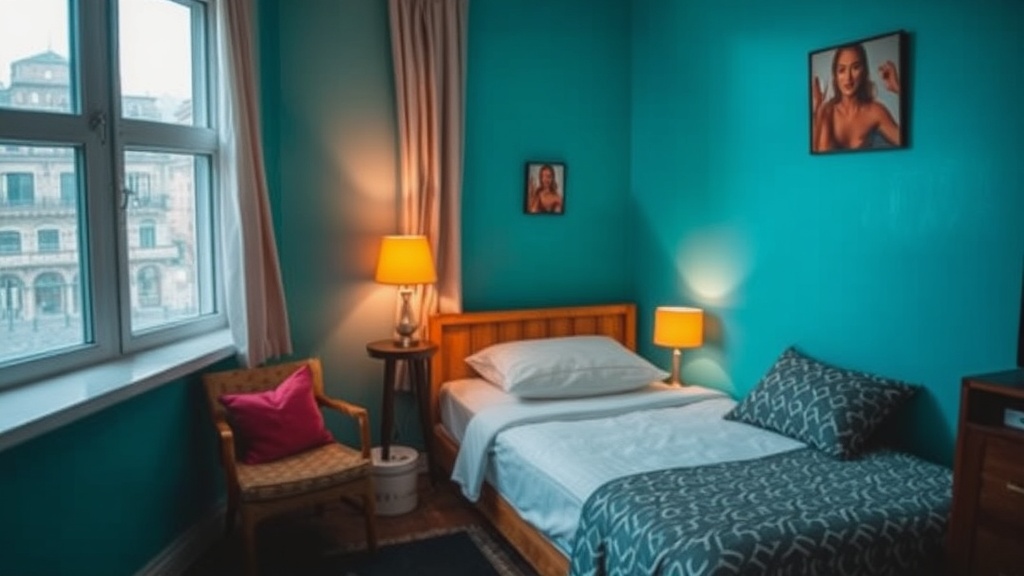
7 Ways to Find Cheap Accommodation Without Staying in Hostels

Try House Sitting Platforms
Look for Local Guesthouses and B&Bs
Rent a Room via Private Hosts
Check Religious Retreat Centers
Use Apartment Rentals for Long Stays
Look for University Dorms in Summer
Consider Farm Stays and Agritourism
You are sitting in a small café in the center of Lisbon, looking at a hotel booking site that wants to charge you $150 per night for a room that barely has a window. You want a private bathroom and a real bed, but you also want to keep your daily budget under $50. This is a common dilemma for travelers who have outgrown the loud, shared dorms of hostels but aren't ready to commit to luxury hotel prices. This post outlines seven specific methods to secure private, comfortable accommodation at a fraction of the standard tourist rate.
Finding affordable lodging is the most significant lever you can pull to extend your travels. While hostels are the traditional budget go-to, they aren't for everyone. Whether you need silence to work on your laptop or simply crave personal space, these alternatives allow you to maintain a high quality of life without draining your savings.
1. Utilize Home Exchange and House Sitting Networks
House sitting is one of the most effective ways to stay in high-end homes for free. Instead of paying a nightly rate, you are essentially acting as a temporary caretaker for someone's property, usually while looking after their pets. This is not a "vacation rental" in the traditional sense; it is a responsibility-based exchange.
To do this successfully, you need to build a profile that establishes trust. Use platforms like TrustedHousesitters or Nomador. These sites are widely used in Europe and North America. When applying for a sit, do not just send a generic message. Mention specific details about the house or the pet listed in the description. If the owner mentions a Golden Retriever named Max, tell them you have experience with large, high-energy dogs. This specificity increases your approval rate significantly.
If you prefer a direct exchange rather than pet care, look into HomeExchange.com. This requires a membership fee, but it allows you to swap your own apartment with someone else's home. If you live in a city like Chicago and are traveling to Barcelona, you can swap homes with a local, providing you with a full apartment and kitchen for the duration of your trip without a single cent in accommodation costs.
2. Book Guesthouses and Homestays via Local Platforms
Large booking engines like Expedia or Booking.com often prioritize large hotel chains or high-commission properties. To find cheaper, more authentic options, you need to look at platforms that cater to local-run businesses. In Southeast Asia and parts of Eastern Europe, "Guesthouses" or "Homestays" are the standard for budget-conscious travelers who want a private room.
In countries like Vietnam or Thailand, searching for a "Homestay" on Agoda or even Google Maps can yield much better results than searching for "Hotels." A homestay often provides a private room within a family-run building. You get the privacy of a hotel room, but the price is often 40% lower because the business doesn't have the massive overhead of a global brand. You also gain access to a home-cooked breakfast, which saves you money on your first meal of the day.
When booking these, always check the "Amenities" section carefully. While you might get a private room, a "shared bathroom" is common in budget homestays. If a private bathroom is a non-negotiable for you, ensure that specific term is in the listing title. This is a great way to learn how to explore Vietnam on $30 a day or similar low-cost regions without sacrificing basic comfort.
3. Leverage the "Apartment with Kitchen" Strategy
One of the biggest hidden costs of travel is dining out three times a day. By booking an apartment or a studio through Airbnb or Vrbo, you are investing in your ability to save money on food. A $60/night studio apartment might seem more expensive than a $30/night budget hotel, but if that studio has a full kitchen, you can drastically reduce your daily food spend.
To make this work, shop at local grocery stores like Lidl in Europe or Tesco in the UK rather than eating at tourist-heavy restaurants. If you can prep even just one meal a day—like breakfast or dinner—the savings add up. For example, a breakfast of eggs, fruit, and coffee from a local market costs roughly $3, whereas a cafe breakfast in London can easily cost $15. Over a two-week trip, this strategy alone can save you hundreds of dollars.
When searching for apartments, use the "Kitchen" filter immediately. Also, look for "Long-stay discounts." Many hosts on Airbnb offer 10% to 30% off if you book for seven days or more. If you are a slow traveler, booking one apartment for a full week is significantly cheaper than moving hotels every two days.
4. Search for University Accommodations During Breaks
If your travel coincides with summer breaks or semester transitions, university dormitories are a goldmine. Many universities in the UK, Canada, and Australia rent out student housing to the public during the summer months. These rooms are designed for students, meaning they are functional, compact, and extremely affordable.
These accommodations often offer more than just a bed. Because they are part of a campus, you often have access to large libraries, study halls, and even sports facilities. The benefit here is the "neighborhood" feel. University districts are usually well-connected by public transit and filled with student-priced food and drink options, which keeps your total daily spend low.
To find these, do not search for "Hotels near me." Instead, search for "[University Name] summer accommodation" or "[City Name] university housing rentals." This bypass of the standard travel search engine will lead you directly to the source of the lower pricing.
5. Use Religious or Non-Profit Guesthouses
In many parts of the world, particularly in Europe and South America, religious institutions operate guesthouses that are open to the public. These are not "monastery stays" in a spiritual sense; they are simply low-cost, clean, and quiet lodging options. They are often run by orders of monks, nuns, or non-profit organizations.
In Italy, for example, Case per Ospiti (houses for guests) run by religious orders are common. They offer a level of quiet and cleanliness that is hard to find in the city center. These locations are ideal for travelers who need a focused environment to work or read. Because they are not profit-driven in the same way a Hilton or Marriott is, the rates remain remarkably low even in high-traffic areas.
To find these, look for terms like "Convent stay," "Monastery guest house," or "Religious guesthouse" in your search engine. Be aware that these locations often have stricter "house rules"—such as no alcohol on the premises or a quiet hours policy—but the trade-off for price and peace is usually worth it.
라6. Look for "Business Hotels" in Major Cities
In major metropolitan hubs like Tokyo, Seoul, or even New York, there is a specific class of hotel known as the "Business Hotel." These are designed for professionals who need a reliable place to sleep between meetings. They are typically much smaller than standard hotels, but they are highly efficient and often very affordable.
In Japan, chains like APA Hotel or Toyoko Inn are staples of the business traveler. These rooms are small—sometimes just enough space for a bed and a small desk—but they are impeccantly clean and often include amenities like high-speed Wi-Fi and even laundry facilities. Because they prioritize function over luxury, you aren't paying for a massive lobby or a rooftop pool you'll never use.
The trick is to avoid searching for "Luxury Hotels" or "Boutique Hotels" in these cities. Instead, search for "Business Hotels" or "Capsule Hotels" (if you are willing to compromise slightly on space). This ensures you are looking at the inventory that caters to the practical, budget-conscious professional rather than the high-spending tourist.
7. Book "Apart-Hotels" for Extended Stays
An "Apart-hotel" is a hybrid between a hotel and an apartment. You get the service of a hotel (like a front desk or housekeeping) but the amenities of an apartment (like a kitchenette). These are becoming increasingly popular in cities like Berlin, Madrid, and Dubai.
The advantage of an apart-hotel is the scalability of price. Most apart-hotel chains offer tiered pricing where the nightly rate drops significantly the longer you stay. If you are traveling for a month, an apart-hotel is often much more cost-effective than a standard hotel. It also provides a more "local" feel, as these buildings are often integrated into residential neighborhoods rather than being isolated in tourist zones.
When using these, always verify the "Kitchenette" status. Some apart-hotels only offer a coffee maker and a small fridge, while others have a full stovetop and oven. If your goal is to save money by cooking your own meals, ensure the property meets your specific cooking needs before booking. This is a crucial part of finding cheap ways to travel effectively over long periods.
Pro-Tip: Regardless of which method you choose, always check the "Location" on a map before booking. A cheap room that requires a $20 subway ride every day to get to the sights is not actually a budget option. Always calculate the "Total Cost of Stay," which includes the room rate plus the estimated daily transit cost.